
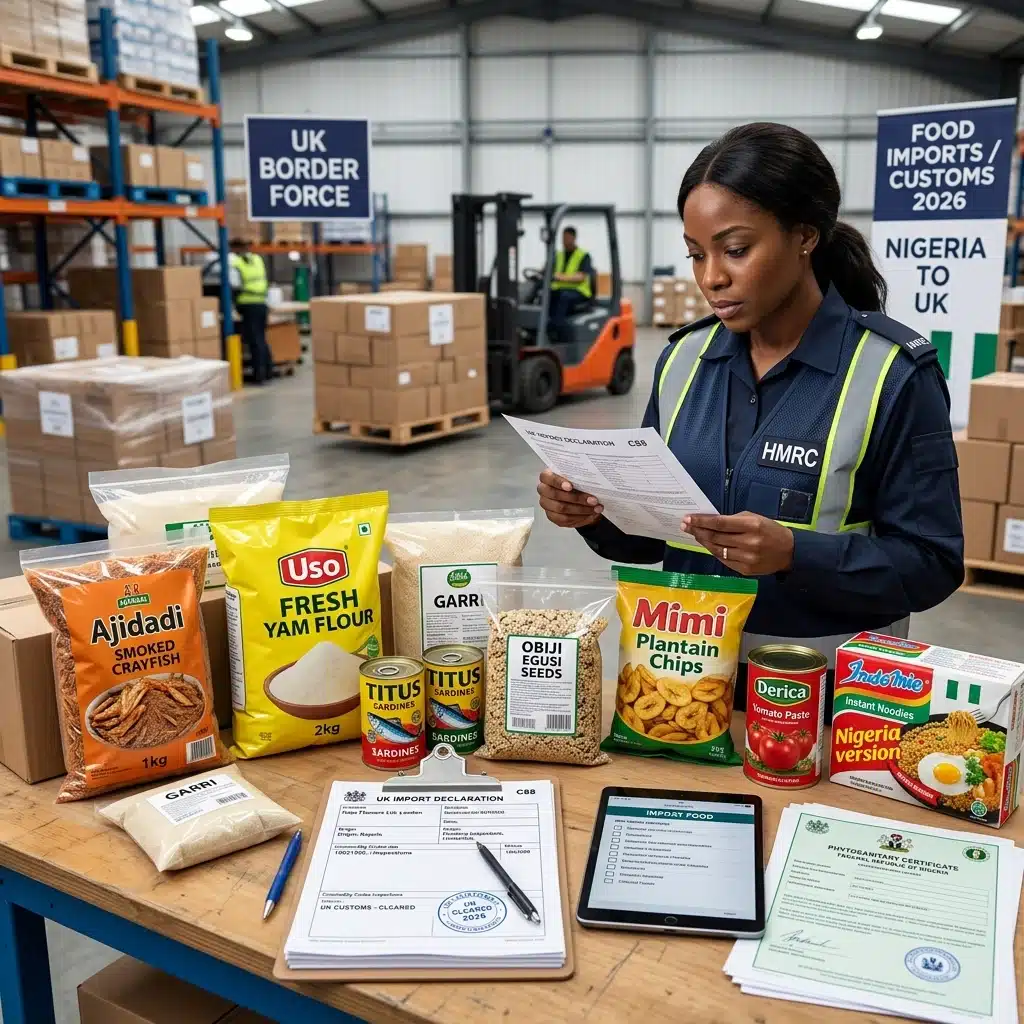
It’s 11 PM on a Monday, and you are likely staring at a laptop screen, deep into a Google search, wondering if that shipment of authentic spices and staples will actually clear the border. Whether you are a business owner like Oluranti looking to stock a shop in Peckham or an entrepreneur like Chukwuemeka starting an online grocery brand, the dream is the same: bringing a taste of home to the UK. However, the reality of how to import food from Nigeria to UK can be a maze of "Products of Animal Origin" (POAO) rules, phytosanitary checks, and customs declarations that could give anyone a headache.
In today’s fast-paced world, the demand for authentic African cuisine in the UK has never been higher. But in 2026, the rules for moving perishables and dry goods across borders are stricter than ever. If you don't have the right paperwork or you try to ship a "prohibited" item, you aren't just looking at a delay; you're looking at your entire investment being destroyed at the port. At Global Corporate Logistics, we’ve spent years helping businesses navigate these waters, and this guide is designed to take the guesswork out of your next shipment.
The "Green List": Permitted Goods for Your Import Business
Knowing what you can actually bring in is the first step to a successful venture. While the UK has high standards for food safety, many Nigerian staples are perfectly legal to import, provided they have been processed correctly to remove biological risks.
When you are looking at importing garri to UK, you are generally in a "safe" zone. Because garri is fermented, dried, and processed, it is no longer considered a "raw" root vegetable, which would be subject to much tighter plant health controls. Similarly, import palm oil UK shipments are highly successful when the oil is refined and bottled professionally. Raw, unrefined oils can sometimes trigger extra scrutiny due to sediment or impurities.
Common items that clear customs easily:
- Processed Flour and Grains: This includes yam flour (elubo), cassava flour (lafun), and high-quality garri.
- Refined Oils: Pure, refined palm oil and vegetable oils in commercial packaging.
- Dried Spices and Herbs: Suya spice (without bouillon containing meat extract), pepper soup mix, and dried herbs like bitter leaf (dried/processed).
- Nuts and Seeds: Groundnuts (peanuts), melon seeds (egusi), and ogbono, provided they are free from mold and properly packaged.

The "Red Zone": Prohibited and Restricted Items
This is where most importers get into trouble. The UK government is incredibly protective of its agricultural industry, and certain items from Nigeria are currently under a strict "Red Zone" or total ban. The most famous of these is the ban on dried beans. If you are trying to import food from Nigeria to UK, you must know that dried beans (brown beans, honey beans, etc.) from Nigeria are prohibited due to high levels of dichlorvos (a pesticide).
Another major hurdle is POAO import UK Nigeria (Products of Animal Origin). This category includes anything that contains meat, dairy, eggs, or certain fish products. If your Suya spice contains "meat stock" cubes or if you are trying to ship kilishi (beef jerky), your shipment will almost certainly be seized and destroyed. Even fried fish can be a dilemma; unless it is specifically processed and accompanied by an Export Health Certificate (which is very difficult for small batches), it is often categorized as a high-risk animal product.
Items to avoid or approach with extreme caution:
- Dried Beans: Currently prohibited from Nigeria.
- Meat Products: Kilishi, meat-based seasonings, or any dried meat.
- Fresh Fruit and Vegetables: These require a Phytosanitary Certificate and often face "High-Risk" inspections that can cost more than the goods are worth.
- Crayfish and Stockfish: These can be imported but must be professionally dried and meet specific health marking standards to avoid being flagged as high-risk POAO.
Mastering the Documentation Trail
To ensure a smooth UK customs clearance Nigeria process, your paperwork must be flawless. Gone are the days when you could put "foodstuffs" on a manifest and hope for the best. In 2026, the UK Customs Declaration Service (CDS) requires specific commodity codes for every single item in your box.
First, you will need an EORI number. Whether you are a limited company or a sole trader, you cannot legally import commercial goods into the UK without one. Additionally, most Nigerian food exports are subject to NAFDAC (National Agency for Food and Drug Administration and Control) clearance on the Nigerian side before they even leave the country.
Essential documents for your shipment:
- Commercial Invoice: A detailed list of what is in the shipment and the actual value (don't under-declare, or you will face heavy fines).
- Packing List: A breakdown of how many bags, boxes, or pallets you are shipping.
- Phytosanitary Certificates: Required for many plant-based items to prove they are free from pests.
- IPAFFS Notification: For "High-Risk" food of non-animal origin, you must pre-notify the UK authorities via the IPAFFS system before the goods arrive.

Air Freight vs. Sea Freight: Which is Best for Food?
Choosing the right transport method is a balance between your budget and the shelf life of your goods. If you are shipping 500kg of egusi and garri, Air Freight is often the winner. While it is more expensive per kilogram, the goods arrive in 3-5 days, meaning there is less chance of moisture damage or spoilage in a hot shipping container. You can check our Air Freight categories for the latest rates.
However, if you are moving several tonnes of refined palm oil or heavy bags of flour, Sea Freight is much more cost-effective. The downside is the transit time, usually 4-6 weeks from Lagos to Tilbury or Liverpool. During this time, your goods are sitting in a container that can experience massive temperature swings. We highly recommend reading our tactical guide on port backlogs if you choose the sea route.
| Feature | Air Freight | Sea Freight |
|---|---|---|
| Speed | 3-7 Days | 30-45 Days |
| Cost | Higher (per kg) | Lower (per CBM) |
| Best For | Spices, Dried Veg, Time-sensitive stock | Palm Oil, Flour, Bulk grains |
| Risk | Minimal spoilage | Moisture and heat risk |
How GCL Handles the Customs Stress
Navigating UK customs clearance Nigeria shouldn't be your full-time job, you should be focused on selling your products and growing your brand. This is where a professional freight forwarder becomes your best friend. Based in the Manchester and Salford area, Global Corporate Logistics acts as your boots-on-the-ground agent.
We don't just move the boxes; we audit your paperwork before the goods leave Nigeria. We check your import duty Nigeria to UK rates to ensure you aren't overpaying. Most importantly, we handle the IPAFFS notifications and the CDS entries that often trip up new importers. If a customs officer has a question about your "processed cassava," we are the ones who answer the phone and provide the technical evidence to get it released.

Ready to Start Your Import Journey?
Importing food from Nigeria is a high-reward business, but it requires a "safety-first" mindset. By focusing on permitted, processed goods and ensuring your documentation is ironclad, you can build a reliable supply chain that keeps your customers happy and your business profitable.
Whether you are shipping a single pallet or a full container, we are here to help. At Global Corporate Logistics, we offer specialized customs clearance solutions tailored specifically for the Nigerian trade corridor.
Are you an eCommerce seller looking to scale your African food brand? Managing your logistics is only half the battle, automating your shipping and capturing customer data is the other. To streamline your business operations and get your logistics on autopilot, sign up for Shipflow today to manage your shipments and leads seamlessly.
For a personalized quote or a deep dive into your specific product list, contact our expert team today. Let’s get your goods moving!
FAQ: Importing Food from Nigeria to the UK
1. Can I import dried beans from Nigeria to the UK in 2026?
No, there is currently a strict ban on Nigerian dried beans due to high pesticide levels. Attempting to import them will result in the seizure and destruction of your shipment.
2. What is an EORI number and do I need one?
An EORI (Economic Operator Registration and Identification) number is a unique ID used by UK customs to track commercial shipments. Yes, you absolutely need one to import food for business purposes.
3. Is palm oil legal to import?
Yes, refined palm oil is legal and commonly imported. It should be professionally packaged and labeled to ensure it clears health inspections without delay.
4. What is POAO?
POAO stands for Products of Animal Origin. This includes meat, dairy, and eggs; these items are highly restricted and often require complex health certificates that make small-scale import difficult.
5. How much is the import duty from Nigeria to the UK?
Duty rates vary depending on the specific food item and its commodity code. Most processed grains have low duty rates, but it is essential to check the UK Global Tariff tool or ask your GCL agent.
6. Can I ship fresh yams?
Fresh yams are permitted but require a Phytosanitary Certificate from Nigeria. They are also subject to physical inspections at the UK border, which can add costs.
7. Why was my crayfish seized by customs?
Crayfish is often flagged as a POAO. If it isn't dried to a specific standard or if it lacks the correct health documentation, customs may view it as a bio-hazard.
8. Do I need a NAFDAC certificate to export from Nigeria?
Yes, for commercial quantities, NAFDAC must certify the food items for export on the Nigerian side. This ensures the goods meet international safety standards before leaving.
9. How long does air freight take from Lagos to Manchester?
Typically, air freight takes between 3 to 7 working days, including the time required for customs clearance at both ends.
10. Can GCL help me with packaging my food items?
Yes, we provide expert packaging solutions to ensure your food items are protected from moisture and pests during their journey.