
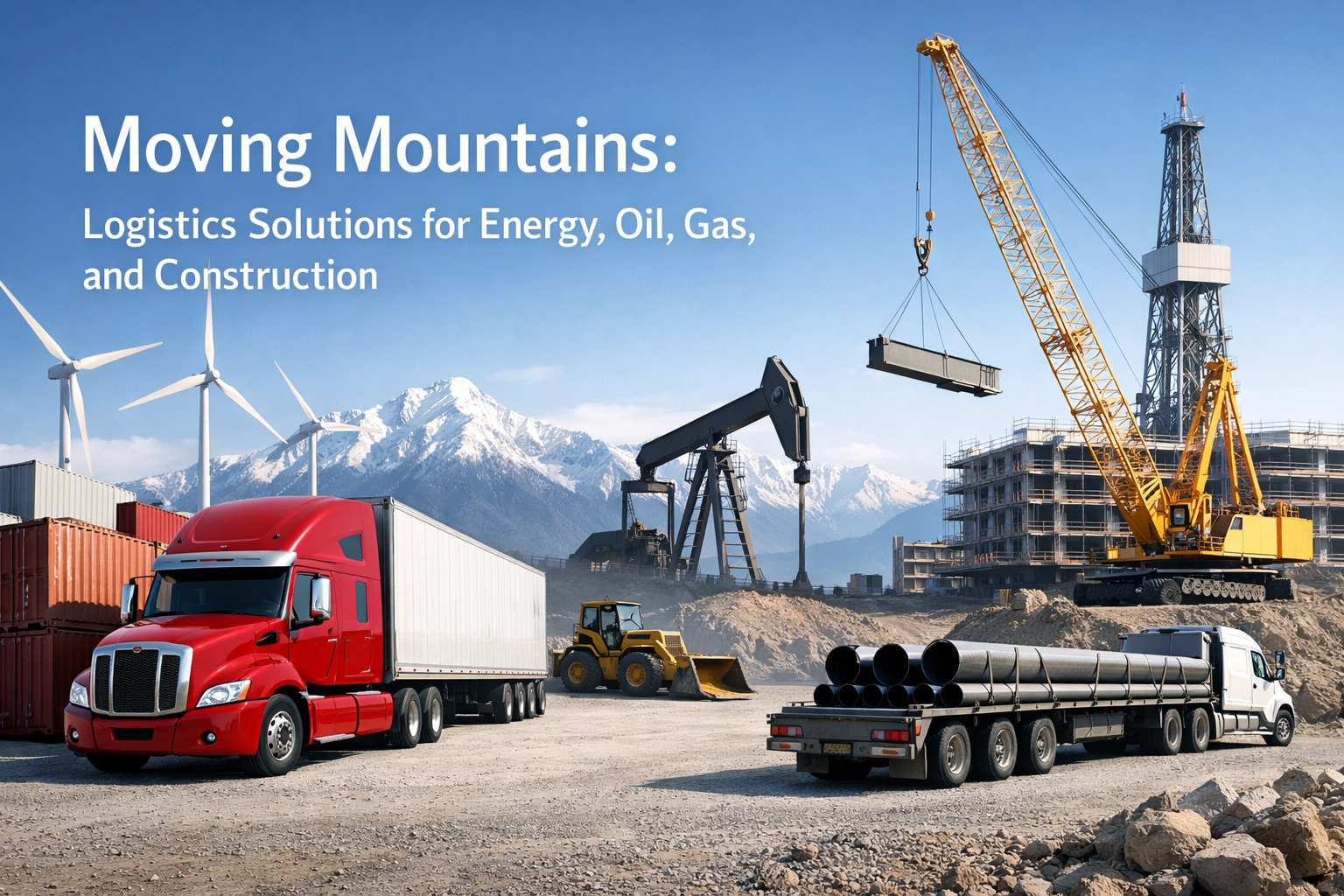
In today's energy and construction sectors, downtime isn't just expensive, it can cost millions per hour. When a drilling rig sits idle waiting for a replacement turbine, or a wind farm project stalls because rotor blades are stuck in customs, entire project timelines collapse like dominoes.
We've spent years moving the unmovable: 200-tonne transformers, 80-meter wind turbine blades, and entire modular refineries. This isn't your standard parcel delivery, it's orchestrated chaos turned into seamless operations.
Why Heavy Industry Logistics Plays by Different Rules
Standard logistics thinks in boxes and pallets. Heavy industry logistics thinks in megatonnes and megaprojects.
The energy, oil, gas, and construction sectors require specialized expertise because the cargo itself rewrites the rulebook. You can't simply load a 150-foot drilling component onto a standard container ship and hope for the best. These projects demand military-level precision combined with the flexibility to adapt when a cyclone closes your preferred port or political instability reroutes your shipment mid-ocean.
Here's what makes heavy industry logistics unique:
- Scale beyond imagination: Individual components can weigh more than 300 tonnes and require custom-engineered transport solutions
- Project-critical timing: A delayed shipment doesn't just inconvenience, it can halt billion-dollar projects and breach contractual obligations
- Multi-modal complexity: Moving a gas turbine from Germany to an offshore platform in the North Sea involves trucks, specialized sea freight, cranes, and potentially helicopters
- Regulatory nightmares: Each jurisdiction has different permits for oversized loads, and international shipments face exponentially more paperwork
Traditional freight forwarding sees these challenges and backs away slowly. We see them and start making phone calls.
The Equipment Challenge: When "Oversized" Is an Understatement
Let's talk about what "heavy equipment" actually means in this context. We're not discussing your typical industrial machinery.
Oil and gas projects involve:
- Drilling rigs with components exceeding 100 tonnes
- Pipeline sections spanning hundreds of meters
- Storage tanks that dwarf most buildings
- Refinery modules pre-assembled to reduce on-site construction time
Renewable energy projects require:
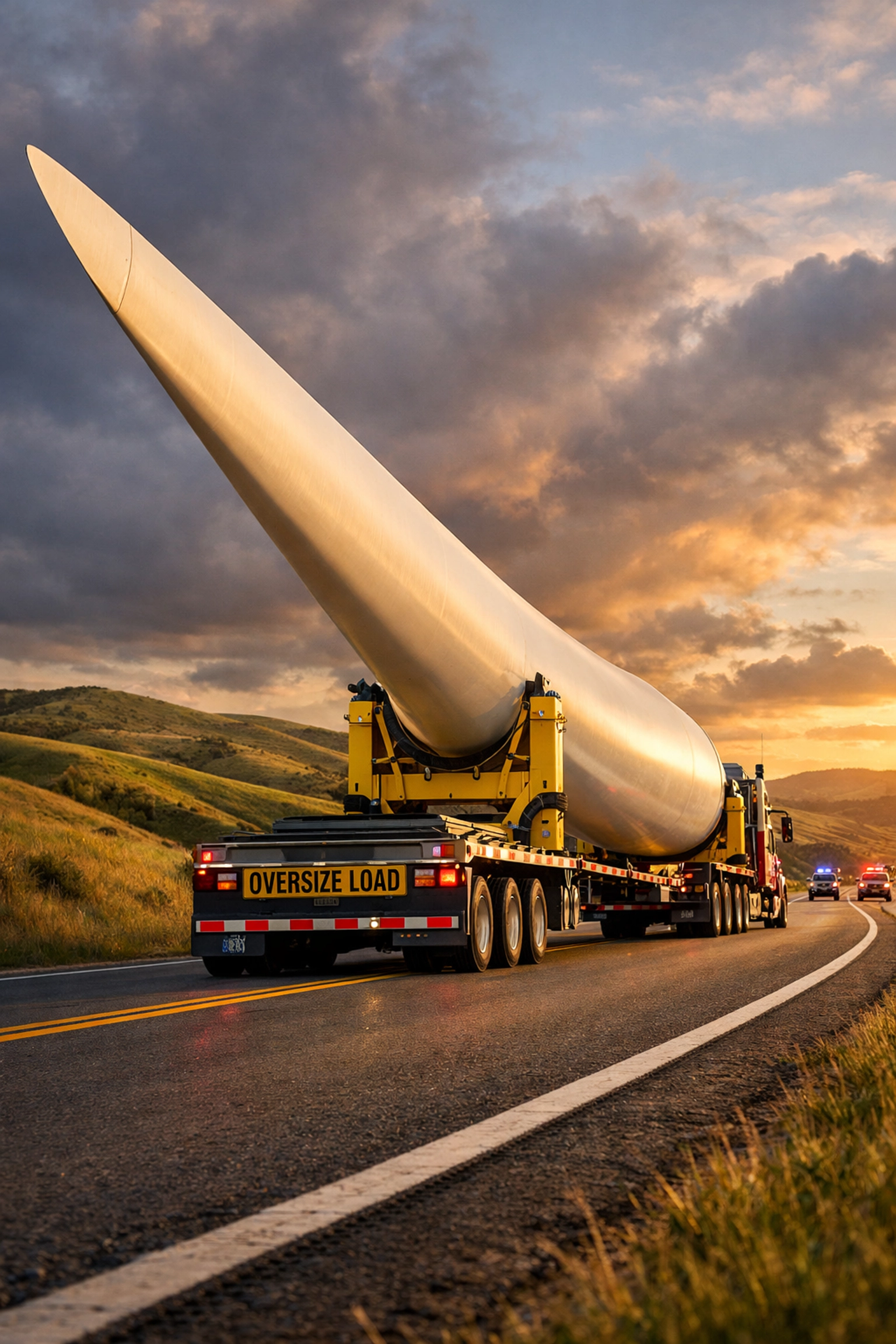
- Wind turbine blades measuring 60-80 meters (longer than most commercial aircraft)
- Nacelles weighing 70-100 tonnes
- Tower sections that need specialist transport corridors
- Solar panel arrays requiring delicate handling despite their size
Construction megaprojects demand:
- Prefabricated bridge sections
- Mining equipment that can't fit through standard tunnels
- Power generation equipment for remote locations
- Concrete batching plants shipped in modules
Each of these cargo types requires detailed route surveys, structural engineering assessments, and coordination with local authorities across potentially dozens of jurisdictions. We don't just ship, we orchestrate.
Sea Freight: The Backbone of Heavy Equipment Transport
When you're moving equipment that makes cargo ships look small, sea freight becomes your best friend. But not just any sea freight, you need specialized vessels and expertise.
Our sea freight UK solutions for heavy industry include access to:
- Break-bulk vessels: For cargo too large or awkwardly shaped for containers
- Heavy-lift ships: Equipped with cranes capable of lifting hundreds of tonnes
- Ro-Ro (Roll-on/Roll-off) vessels: Perfect for wheeled equipment and self-propelled modules
- Semi-submersible ships: For ultra-heavy cargo like oil rigs and large vessels themselves
The beauty of sea freight for heavy equipment is capacity. While air freight maxes out around 100 tonnes (and costs a fortune), a single heavy-lift vessel can transport thousands of tonnes in one voyage. For energy projects with multiple large components, this means consolidated shipping that reduces both costs and complexity.
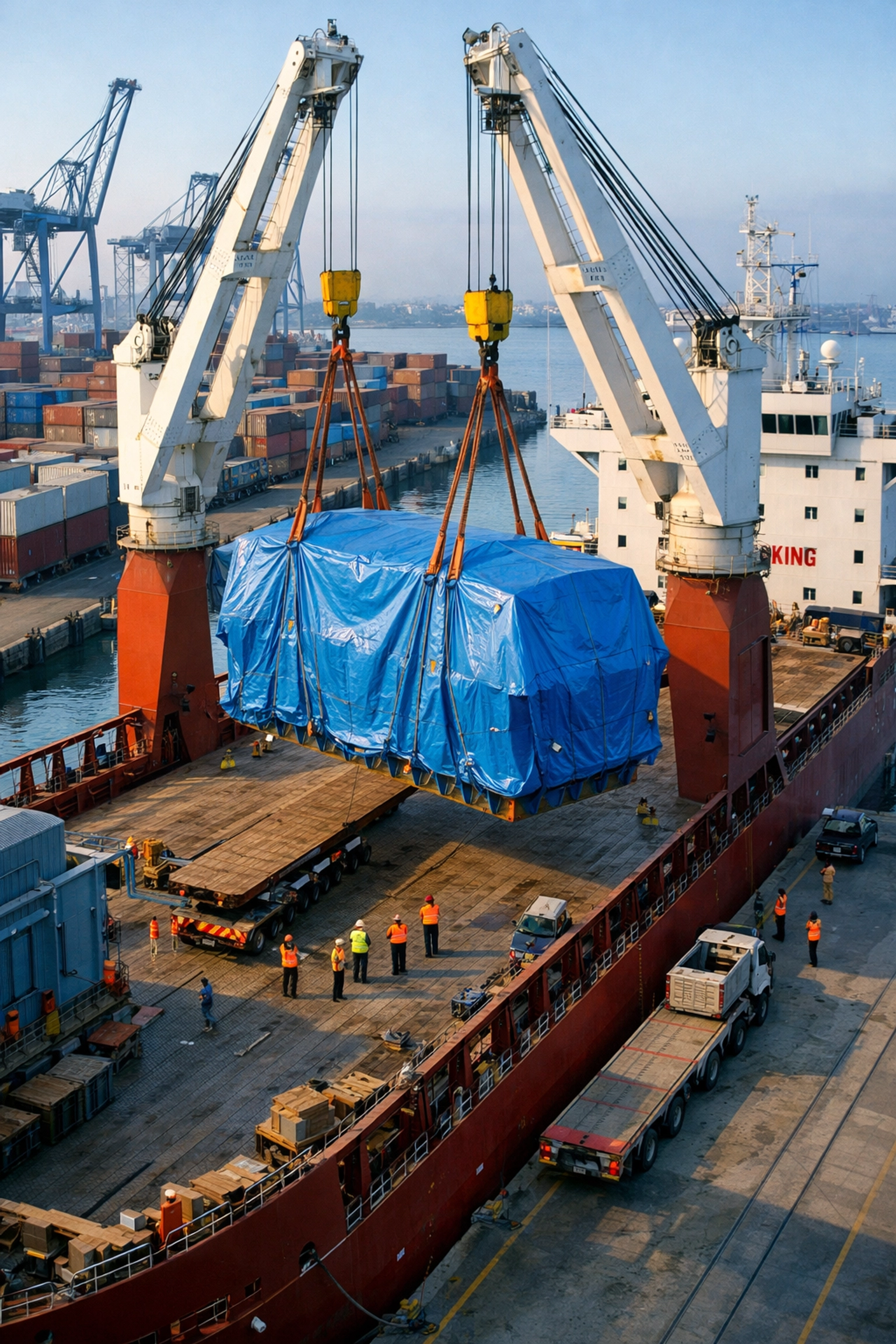
We coordinate with specialized ports equipped to handle oversized cargo, facilities with reinforced quaysides, heavy-duty cranes, and the spatial layout to maneuver massive components. Not every port can accommodate a 200-tonne transformer arriving on a specialist vessel, so route planning starts with understanding which facilities can physically handle your cargo.
Project Cargo Expertise: From Planning to Installation
Here's where logistics transforms into project management. Moving heavy equipment isn't a transaction, it's a months-long collaboration.
Pre-project planning involves:
- Engineering feasibility studies to determine optimal transport methods
- Route surveys that identify every bridge weight limit, overhead clearance, and road width restriction
- Permit acquisition across multiple jurisdictions
- Coordination with utility companies to temporarily relocate power lines if needed
During transport, we manage:
- Real-time tracking with GPS and monitoring systems
- Weather routing to avoid storms that could endanger cargo
- Escort vehicle coordination for road transport
- Port-to-site final mile delivery using specialized heavy-haul trucks
Post-delivery support includes:
- Customs clearance for international shipments (learn more about our customs clearance services)
- On-site positioning using cranes and rigging equipment
- Coordination with installation teams to ensure seamless handoff
- Documentation management for warranty and compliance purposes
One of our recent projects involved transporting wind turbine components from European manufacturers to UK wind farms. The blades alone required police escorts, temporary road closures, and custom-engineered cradles to prevent damage during transport. The entire operation took four months of planning and six weeks of execution, and arrived on schedule.
Safety and Insurance: Protecting Million-Pound Investments
When a single piece of equipment is worth more than most people's houses, insurance isn't optional, it's absolutely critical.
Heavy equipment faces unique risks during transport. A sudden storm can shift cargo on a vessel. Road vibrations can stress turbine components beyond design tolerances. Crane operations involve inherent risks when lifting hundreds of tonnes.
Our comprehensive insurance approach covers:
- Marine cargo insurance for sea freight, protecting against total loss and general average
- All-risk transit insurance covering door-to-door movements
- Third-party liability for potential damages during oversized road transport
- Specialized coverage for high-value energy sector equipment
We work with underwriters who understand energy sector cargo, not just generic freight policies that exclude the very things that make your shipment unique. This means coverage that actually protects your investment rather than finding exclusions when you need to claim.
Documentation is equally critical. Every transport includes photographic evidence at each transfer point, detailed condition reports, and temperature/vibration monitoring for sensitive equipment. If something goes wrong, you have complete traceability.

Specialized Handling for Oil and Gas Operations
The oil and gas sector presents additional challenges that separate experienced logistics providers from amateurs.
Upstream operations (exploration and production) require:
- Supply base management for offshore platforms
- Just-in-time delivery to minimize platform storage requirements
- Emergency response capabilities for critical equipment failures
- Hazardous materials handling for chemicals and drilling fluids
Mid-stream operations (processing and storage) involve:
- Pipeline equipment transport across challenging terrain
- Storage tank logistics for remote facilities
- Compressor station equipment requiring vibration-free transport
- Modular processing units shipped as complete systems
Downstream operations (refining and distribution) demand:
- Planned shutdown logistics for maintenance windows
- Catalyst and chemical transport with strict handling protocols
- Refinery equipment replacement with precision timing
- Distribution network support for fuel and petroleum products
We've supported operations from the North Sea to West Africa, understanding that in oil and gas, "fast" often matters more than "cheap." When production is halted, the cost of delay far exceeds premium logistics rates.
Construction Megaprojects: Logistics That Builds the Future
Major construction projects, whether infrastructure, mining, or industrial facilities, live and die by their logistics.
Consider a bridge construction project. Prefabricated sections might be manufactured in three different countries, shipped to a central assembly point, then transported to the final site. Each section must arrive in perfect sequence, you can't install segment seven before segment six arrives.
We provide construction projects with:
- Sequenced delivery scheduling so components arrive exactly when needed
- Multi-modal transport combining sea, road, and sometimes rail
- On-site warehousing when early delivery is unavoidable
- Reverse logistics for equipment demobilization after project completion
Mining projects in remote locations present another dimension of complexity. How do you transport a 150-tonne haul truck to a site 200 kilometers from the nearest port, with no paved roads? The answer involves custom heavy-haul vehicles, temporary road construction, and sometimes modular transport systems that distribute weight across dozens of axles.
Why Global Corporate Logistics for Your Heavy Equipment Needs
We've moved transformers through London at 3 AM, coordinated multi-vessel shipments for North Sea installations, and delivered wind turbines to remote Scottish highlands. Here's why energy and construction companies trust us with their most critical logistics:
Specialized equipment access: We maintain relationships with specialized transport providers globally, from Goldhofer heavy-haul trailers to semi-submersible ships.
Engineering support: Our team includes logistics engineers who understand structural loads, center-of-gravity calculations, and transport dynamics.
Global network: With partners in every major energy hub, we coordinate seamlessly across continents and time zones.
24/7 project support: Heavy equipment doesn't move on a 9-to-5 schedule, and neither do we. Your project manager has direct access to our operations team around the clock.
Proven track record: We've handled projects from £100,000 shipments to multi-million-pound megaproject logistics.
Whether you're building the next generation of renewable energy infrastructure or maintaining critical oil and gas operations, your logistics partner should move mountains, not just talk about it.
Frequently Asked Questions About Heavy Industry Logistics
What qualifies as "oversized" or "heavy" cargo in logistics terms?
Oversized cargo typically exceeds standard container dimensions (2.4m wide, 2.6m high, 12m long) or weighs more than 30 tonnes. Heavy cargo specifically refers to individual pieces exceeding weight limits for standard transport equipment. For energy and construction projects, we routinely handle cargo weighing 100-300 tonnes and measuring up to 80 meters long.
How long does it take to plan and execute heavy equipment transport?
Planning typically requires 4-12 weeks depending on route complexity, permits needed, and equipment availability. International shipments involving sea freight UK services add transit time ranging from 1-6 weeks. Emergency shipments can be expedited, though this significantly increases costs and limits transport options.
What documents are required for international heavy equipment shipments?
Standard documentation includes commercial invoices, packing lists, certificates of origin, and bills of lading. Heavy equipment adds transport permits, route survey reports, structural engineering certificates, and potentially environmental impact assessments. Energy sector equipment may require additional certifications for hazardous components or pressure vessels.
Can you transport equipment to offshore platforms or remote sites?
Absolutely. We coordinate multi-modal transport including sea freight to offshore platforms, helicopter lifts for critical small components, and specialized heavy-haul vehicles for remote land sites. Access limitations are addressed during planning with alternative routing or equipment modifications to enable transport.
How is cargo protected during sea freight transport?
Heavy equipment is secured using engineered sea-fastening systems designed specifically for each cargo's dimensions and weight distribution. We calculate forces from ship motion, weather conditions, and securing point loads. Additional protection includes weather covers, shock-absorbing cradles, and continuous monitoring during voyage. Comprehensive insurance provides financial protection beyond physical securing.
What happens if equipment is damaged during transport?
Immediate documentation occurs with photographic evidence and condition reports. Our insurance partners assess damage and initiate claims processes. For critical equipment, we can expedite repair or replacement to minimize project delays. Our contracts clearly define liability and compensation procedures before transport begins.
Do you handle customs clearance for heavy equipment imports?
Yes, our customs clearance services specialize in complex industrial equipment. We manage classification codes, duty calculations, import licenses, and regulatory compliance. For energy sector equipment, this includes environmental certifications and safety standard documentation required by UK authorities.
What's the cost difference between standard and heavy equipment logistics?
Heavy equipment logistics typically costs 3-10 times standard freight rates due to specialized equipment, permits, escorts, and route surveys. However, the cost as a percentage of equipment value is often reasonable (2-5%). We provide detailed quotes accounting for all transport elements so you can budget accurately without surprises.
Can transport be tracked in real-time for high-value equipment?
Yes, we provide GPS tracking with geofencing alerts, movement notifications, and environmental monitoring (temperature, humidity, shock). Sea freight includes AIS vessel tracking. Road transport provides real-time location updates. You receive access to our tracking portal showing your cargo's exact location and status 24/7.
What regions do you serve for heavy industry logistics?
We coordinate heavy equipment transport globally, with particular expertise in UK domestic movements, Europe-UK routes, and intercontinental shipments to energy sector hubs. Our network includes specialized carriers in North America, Middle East, Asia-Pacific, and Africa. If there's an energy project or construction site, we've likely shipped equipment there.
Ready to move your next big project? Contact Global Corporate Logistics today for specialized heavy equipment logistics that delivers on time, every time. Visit globalcorporatelogistics.com or speak with our project cargo specialists about your specific requirements.