

If you're a UK business shipping spare parts, pharmaceuticals, or fashion items to Nigeria, Ghana, or the UAE, you've probably already discovered that customs clearance in these markets isn't exactly straightforward. Each country has its own documentation requirements, electronic systems, and compliance hurdles that can turn a simple shipment into a logistical headache.
The good news? With the right Manchester customs clearance agent on your side, navigating these markets becomes a lot simpler. Here's what you need to know about getting your commercial cargo through customs in Nigeria, Ghana, and the UAE, without the delays, fines, or frustration.
Why These Markets Matter for UK Exporters
In today's interconnected global economy, Nigeria, Ghana, and the UAE represent some of the fastest-growing trade corridors for UK businesses. Nigeria and Ghana are key entry points into West Africa's 400-million-strong consumer base, while the UAE serves as the commercial gateway to the Middle East and beyond.
Whether you're sending automotive spare parts to Lagos, fashion shipments to Dubai, or pharmaceutical supplies to Accra, understanding the customs landscape in each market is essential for maintaining smooth operations and avoiding costly hold-ups.
Here's the challenge: each country operates different customs platforms, requires country-specific certifications, and has unique processing timelines. Getting it wrong means delays, storage fees, and potential confiscation of goods.

Nigeria: Navigating SONCAP and Lagos Port Congestion
Nigeria is the largest economy in Africa, but it's also one of the most complex markets for customs clearance. If you're shipping spare parts or fashion items into Lagos Port, Nigeria's busiest commercial hub, here's what you need to know.
The SONCAP Certification Requirement
The Standards Organisation of Nigeria Conformity Assessment Programme (SONCAP) is mandatory for most imported goods, including many spare parts and fashion categories. This country-specific certification verifies that your products meet Nigerian quality and safety standards.
Getting SONCAP certification requires:
- Pre-shipment inspection: Your goods may need to be inspected at origin before they leave the UK.
- Product testing documentation: Depending on your product category, you'll need to provide test certificates.
- SONCAP Certificate or Product Certificate (PC): This must accompany your shipment or you'll face clearance delays at Lagos Port.
Without SONCAP, your cargo can be held indefinitely or rejected entirely. That's why working with a Manchester customs clearance agent who understands Nigeria's certification landscape is critical.
Essential Documentation for Nigeria
Beyond SONCAP, you'll need:
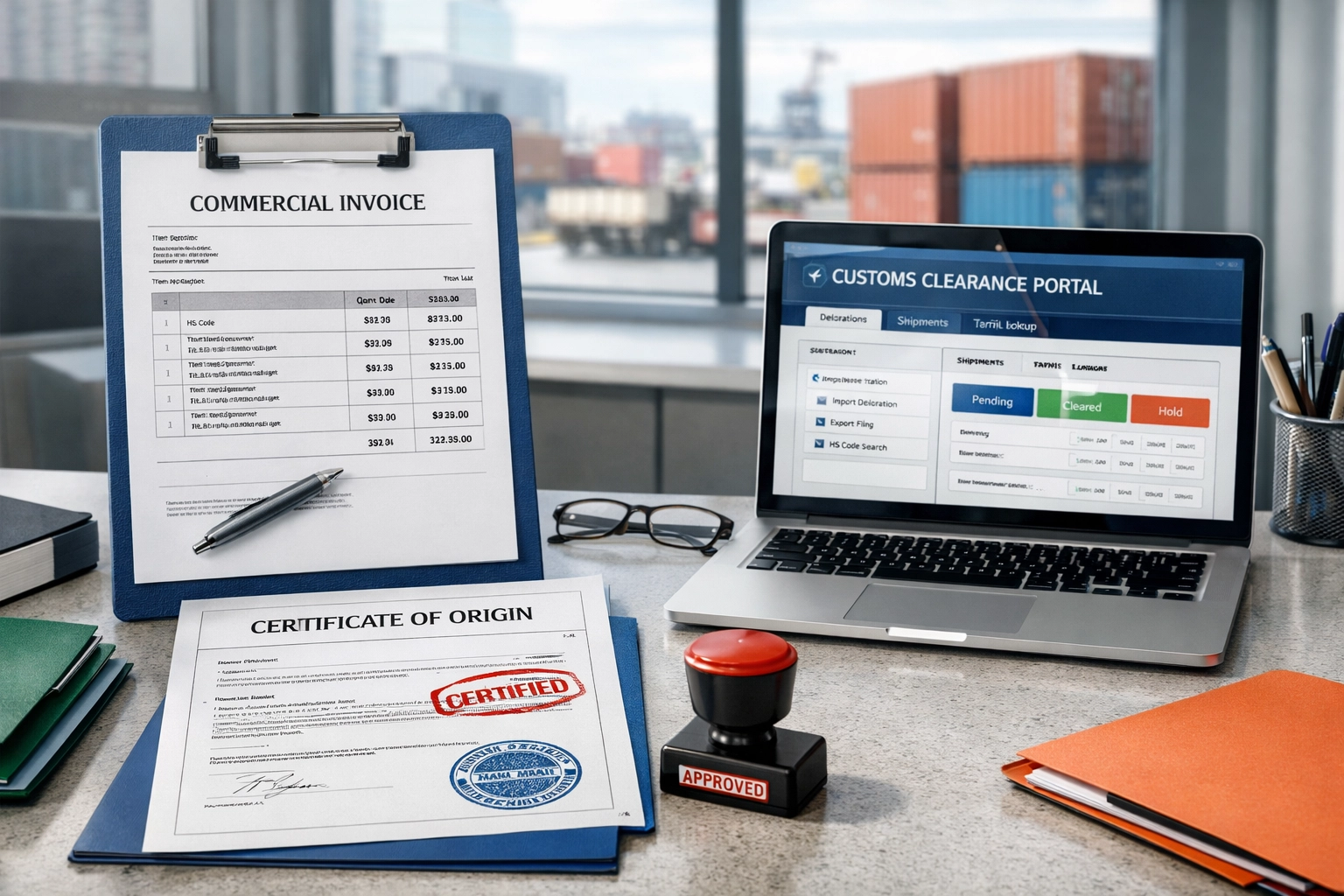
- Commercial invoice with accurate HS codes and declared values
- Packing list detailing every item in your shipment
- Bill of Lading (for sea freight) or Airway Bill (for air cargo)
- Certificate of Origin (usually issued by your local Chamber of Commerce)
- Import permits or licenses if your spare parts or fashion items fall under regulated categories
Timeline Expectations
Sea freight to Lagos typically takes 18–22 days from UK ports, but customs clearance can add another 5–10 days depending on documentation accuracy and port congestion. Air cargo is faster but still requires the same rigorous documentation.
The key to avoiding delays? Submit complete, accurate paperwork before your goods arrive, and have a trusted destination agent in Lagos who can handle inspections and clearance on your behalf.
Ghana: Leveraging Tema Port's Efficiency
Ghana's Tema Port is one of West Africa's most reliable and efficient commercial ports, making it an attractive entry point for UK businesses targeting the West African market.
The GCNet Electronic Platform
Ghana uses GCNet, an electronic customs management system that streamlines clearance but requires proper registration and compliance. All customs declarations, duty payments, and documentation submissions are processed through this platform.
Here's what you need to clear customs in Ghana:
- Commercial invoice and packing list
- Bill of Lading or Airway Bill
- Certificate of Origin
- Customs Tariff Number (CTN) registration: Some shipments require pre-registration with Ghana's customs authority.
- Accurate HS codes: Ghana's customs system relies heavily on correct tariff classification for duty calculation.
Why Ghana Is Easier Than You Think
Compared to other West African markets, Tema Port offers:
- Predictable schedules: Less congestion means fewer unexpected delays.
- Electronic processing: GCNet speeds up clearance when documentation is correct.
- Strategic positioning: Tema serves as a hub for distribution across West Africa, making it ideal for businesses planning regional expansion.
UK businesses shipping spare parts or fashion items to Ghana can typically expect clearance within 3–7 days if all documentation is submitted correctly upfront.
UAE: Speed and Precision in the Middle East
The UAE, particularly Dubai and Abu Dhabi, offers some of the fastest customs clearance timelines in the world, but only if you follow the rules precisely.
Clearance Timelines
- Sea freight: 3–5 days
- Air cargo: 1–2 days
These timelines assume your documentation is complete and your shipment doesn't fall under restricted categories.
Critical UAE Requirements
The UAE's customs system is highly digitised and integrated with the Dubai Trade/Maqta platform. Here's what you need:
- Commercial invoice and packing list
- Bill of Lading or Airway Bill
- Certificate of Origin
- Accurate HS code classification: This determines duty rates and VAT.
- UAE VAT Tax Registration Number (TRN): Your TRN must be linked to your customs clearance.
- Customs business code: You'll need to register with the UAE Federal Customs Authority before your first shipment.
Special Considerations for Spare Parts and Fashion
- Cosmetics and textiles may require pre-approval from UAE authorities.
- Automotive spare parts must meet UAE technical standards and may require certification.
- Dubai Free Zone shipments have different documentation requirements, including original invoices rather than copies.
Payment of duties and VAT is electronic (via e-Dirham or approved platforms), so ensure your financial systems are set up for UAE compliance.
Spare Parts and Fashion: Category-Specific Challenges
Spare Parts
Automotive and industrial spare parts often face additional scrutiny in Nigeria, Ghana, and the UAE because they can fall under regulated or restricted categories. Key considerations include:
- Import licenses: Some spare parts require pre-approval, especially in Nigeria.
- Pre-shipment inspection: Nigeria's SONCAP may require third-party verification before goods leave the UK.
- Accurate descriptions: Vague or generic descriptions on invoices can trigger customs inspections.
Fashion Items
Fashion and textile shipments come with their own challenges:
- Tariff quotas: Nigeria and Ghana may impose quotas on certain textile categories.
- Certificate of Origin: This is essential for proving preferential duty treatment under trade agreements.
- Valuation disputes: Customs authorities in all three markets scrutinise fashion shipments for undervaluation, so accurate declared values are critical.
How Global Corporate Logistics Simplifies the Process
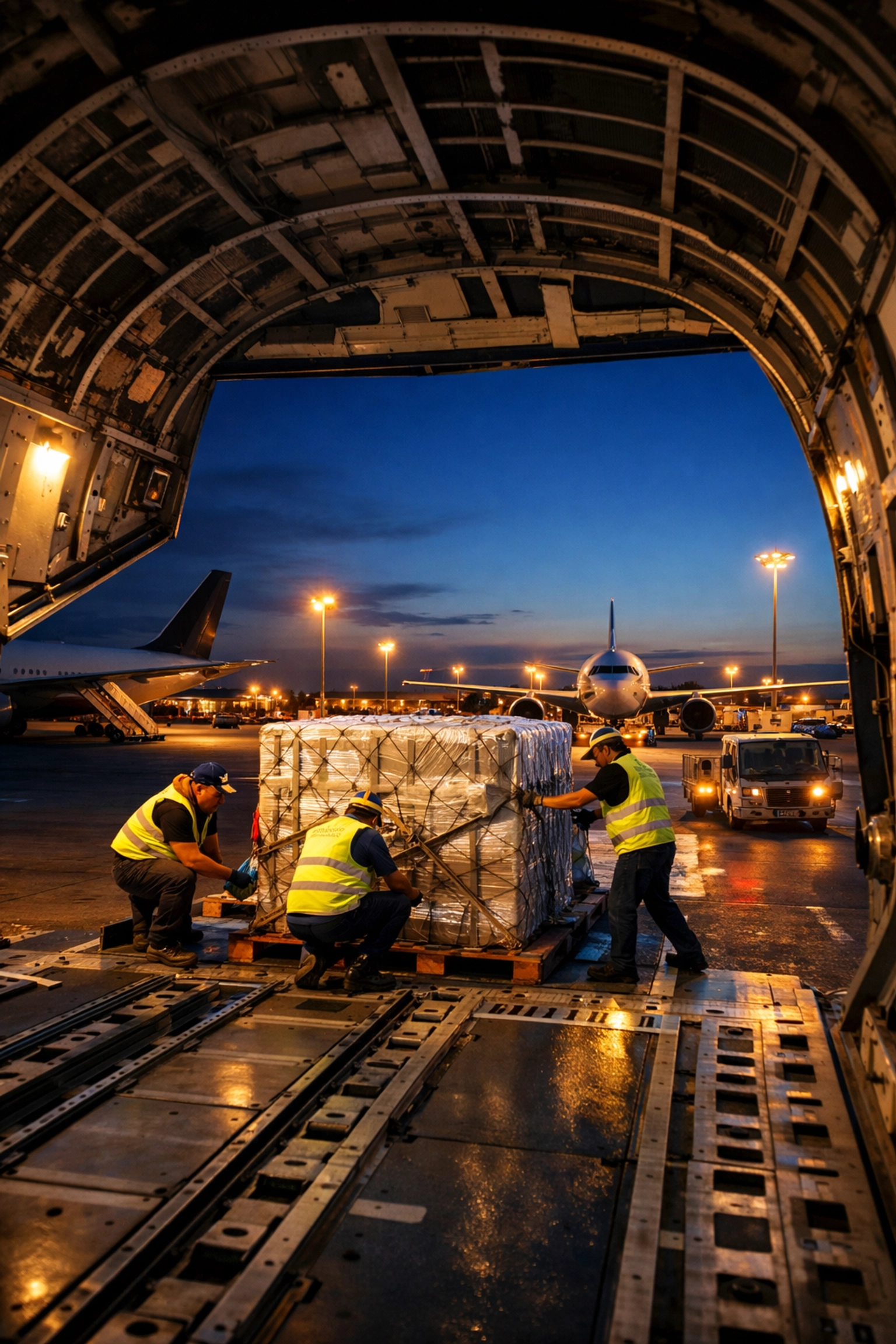
At Global Corporate Logistics, we specialise in air cargo and customs clearance for UK businesses shipping to Nigeria, Ghana, and the UAE. Our Manchester-based team understands the unique challenges of these markets and provides end-to-end support, including:
- Pre-shipment compliance checks: We review your documentation before goods leave the UK to catch errors early.
- SONCAP and certification support: We work with trusted partners in Nigeria to expedite SONCAP certification.
- Electronic platform integration: Our team handles GCNet submissions for Ghana and Dubai Trade for the UAE.
- 24/7 shipment tracking: Monitor your cargo in real time from Manchester to Lagos, Accra, or Dubai.
- Destination customs clearance: We coordinate with licensed customs brokers in each market to ensure smooth clearance on arrival.
Whether you're sending a single pallet of spare parts or regular fashion shipments, we ensure your cargo clears customs on time, every time.
Need help with your next shipment? Call our Manchester team at 0161 706 1220 or visit our customs clearance page to learn more.
For e-commerce businesses shipping smaller parcels worldwide, sign up at Shipflow.io to access instant quotes, book shipments, and track parcels in one platform.
Cross-Border Strategy: Best Practices for Success
Successfully shipping to Nigeria, Ghana, and the UAE requires a proactive approach. Here's how to stay ahead of customs challenges:
1. Prepare documentation before goods arrive: Customs clearance starts at origin, not destination. Ensure all certifications, invoices, and declarations are complete before your cargo leaves the UK.
2. Use accurate HS codes: Incorrect tariff classification is the single biggest cause of customs delays and duty disputes. Double-check your HS codes with a customs expert.
3. Declare values truthfully: All three markets use sophisticated valuation systems to detect undervaluation. Accurate declared values reduce the risk of inspections and fines.
4. Engage licensed customs brokers: Each market requires local expertise. We work with trusted partners in Lagos, Accra, and Dubai who understand country-specific compliance requirements.
5. Plan for contingencies: Even with perfect documentation, port congestion or regulatory changes can cause delays. Build buffer time into your supply chain planning.
Frequently Asked Questions
What is SONCAP and do I need it for every shipment to Nigeria?
SONCAP (Standards Organisation of Nigeria Conformity Assessment Programme) is mandatory for most products entering Nigeria, including many spare parts and fashion items. You'll need either a SONCAP Certificate or Product Certificate before clearance. Work with your freight forwarder to determine if your products require SONCAP certification.
How long does customs clearance take in Lagos compared to Dubai?
Lagos Port clearance typically takes 5–10 days due to documentation checks and congestion. Dubai clears sea freight in 3–5 days and air cargo in 1–2 days, making the UAE significantly faster for time-sensitive shipments.
Can I use the same Certificate of Origin for Nigeria, Ghana, and the UAE?
Yes, a UK Chamber of Commerce-issued Certificate of Origin is accepted in all three markets, but each country's customs authority may have specific requirements for format or information. Verify with your customs agent before shipping.
What happens if my HS code is wrong on the commercial invoice?
Incorrect HS codes can result in duty recalculations, fines, shipment holds, or even confiscation. Customs authorities in Nigeria, Ghana, and the UAE take tariff classification seriously. Always verify your HS codes with a customs expert before shipping.
Do I need a local company registration to import into the UAE?
You don't need a UAE company to import, but you do need a UAE VAT Tax Registration Number (TRN) and a customs business code registered with the Federal Customs Authority. Your customs broker can help set this up before your first shipment.
Are there any prohibited items for spare parts shipments to West Africa?
Yes. Used or refurbished automotive parts may face restrictions in Nigeria and Ghana. Certain industrial spare parts require import permits. Always check the destination country's prohibited and restricted items list before shipping.
How much does air cargo cost compared to sea freight for these routes?
Air cargo to Nigeria, Ghana, or the UAE typically costs 4–6 times more than sea freight but delivers in 3–7 days versus 18–30 days for sea. For urgent spare parts or high-value fashion, air freight is often worth the premium. Contact us at 0161 706 1220 for a quote.
Can fashion items be shipped duty-free to the UAE?
The UAE imposes a standard 5% import duty on most fashion and textile items, plus 5% VAT. Some free zones offer duty exemptions, but goods entering the UAE mainland are subject to standard tariffs. Accurate valuation is essential for calculating duties correctly.
What is GCNet and how does it affect my Ghana shipments?
GCNet is Ghana's electronic customs clearance platform. All import declarations, duty payments, and documentation submissions must be processed through GCNet. Your customs broker will handle the electronic filing, but you must provide complete documentation upfront to avoid system rejections.
Why should I use a Manchester-based customs clearance agent for African and Middle Eastern shipments?
A Manchester-based agent like Global Corporate Logistics understands UK export regulations and has established partnerships with customs brokers in Lagos, Accra, and Dubai. This local-to-destination expertise ensures compliance at both ends of the supply chain, reducing delays and avoiding costly mistakes.
Get Your Free Freight + Customs Health Check
Not sure if your current shipping and customs processes are optimised for Nigeria, Ghana, or the UAE? Our team offers a free Freight + Customs Health Check to identify gaps, reduce costs, and speed up clearance times.
Fill out the form below to schedule your consultation with our Manchester-based customs specialists.
Questions? Call us at 0161 706 1220 or visit globalcorporatelogistics.com to learn more about our air cargo and customs clearance services.